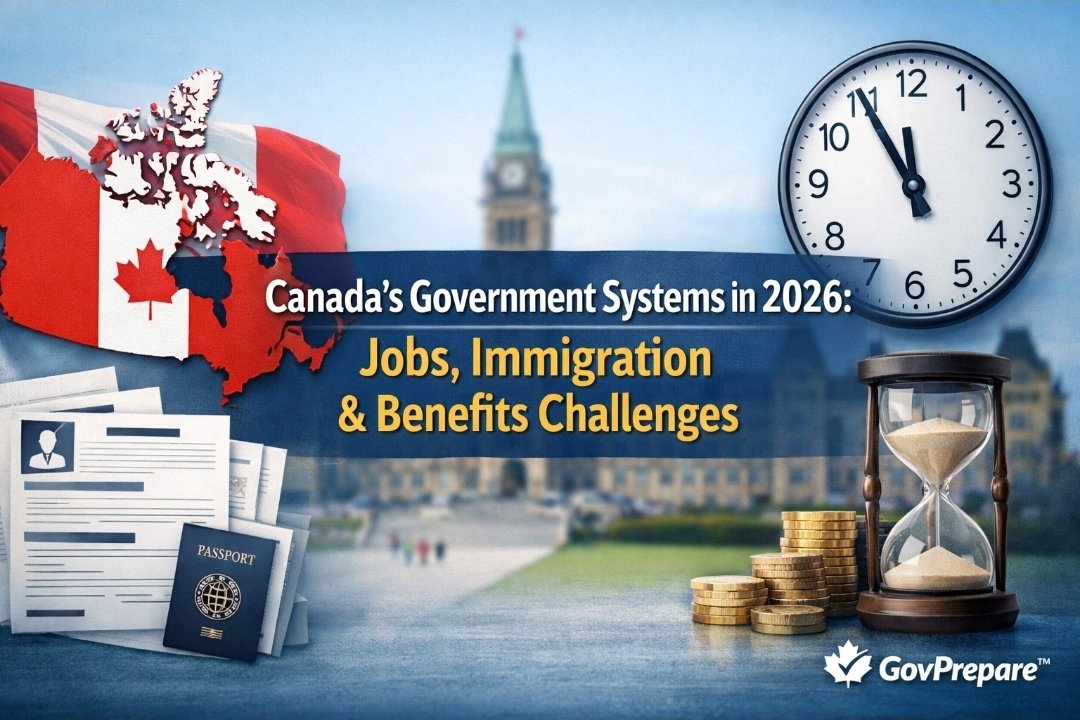
Early Retirement Incentive – Important Information for DND Public Service Employees and Their Managers
By GovPrepare News Desk – December 3, 2025
Standfirst: The Department of National Defence (DND) is launching a time-limited Early Retirement Incentive program for eligible public service employees. This federal initiative targets workforce renewal and aligns with Canada’s evolving defence and public administration priorities.
Key Highlights
- The Early Retirement Incentive is available to eligible DND public service employees across Canada.
- It aims to support workforce transition and strategic resourcing within the DND.
- Employees must meet specific eligibility criteria, including age and years of service.
- Managers have a role in providing strategic support and approval within defined timelines.
- The incentive aligns with broader Public Service Renewal efforts under the federal government.
- Deadline for applications is tied to departmental operational planning needs.
Background and Context
Canada’s federal public service employs over 300,000 Canadians, with the Department of National Defence being one of the largest government departments. The DND plays a dual role in both defence management and civil support, employing over 28,000 civilian staff across Canada.
In recent years, the government has identified specific workforce challenges, including an aging employee base. According to a 2022 report from the Treasury Board of Canada Secretariat, over 45 percent of public service employees were aged 50 or older. The Early Retirement Incentive (ERI) seeks to address this demographic trend through voluntary exits and succession planning.
Similar initiatives have been used in the past during major public service transformations. For instance, a comparable incentive was launched during the Program Review of the 1990s and during periods of organizational restructuring in defense portfolios.
The New Development
On November 30, 2025, the Department of National Defence announced a new Early Retirement Incentive (ERI) for a defined group of federal public service employees classified under DND. This initiative is part of a broader strategy to realign the civilian defence workforce with the evolving operational and technological needs of Canada’s military forces.
The ERI includes a financial incentive for eligible employees who voluntarily retire before their Maximum Retirement Age (typically age 60 or 65, depending on years of pensionable service). The program financially supports transitions while opening roles for newer professionals with updated skill sets, notably in cybersecurity, project management, and defence procurement.
Eligibility criteria include:
- Minimum 55 years of age with at least 30 years of pensionable service, or
- Completion of 35 years of pensionable service at any eligible age
- Permanent, full-time employees with indeterminate status
- Departmental approval based on operational readiness and staffing considerations
Departmental officials noted the ERI is guided by Treasury Board policies and subject to the Financial Administration Act. The program is time-limited and tied to 2025–2026 departmental fiscal forecasts. Employees must submit a Notice to Retire and complete all departure requirements by the program’s official end date, which varies by region and occupational group.
Managers are encouraged to collaborate with Human Resource Business Partners (HRBP) to evaluate eligibility, succession impact, and operational feasibility before endorsing applications.
Expert and Industry Reaction
Human resources specialists within the Public Service Commission welcomed the announcement as a targeted approach to managing institutional knowledge transfer. “The deliberate pace and eligibility of this ERI contrast positively with more abrupt workforce changes,” said a retired HR director who previously administered workforce retraining programs during the 2005–2008 realignment period.
Public policy analysts noted that the initiative supports renewal with minimal disruption. “ERI programs, when managed correctly, reinforce long-term planning and modernization efforts without forcing involuntary exits,” said Dr. Lena Roussel of the Institute for Public Administration of Canada.
Defence staff unions, including those represented under the Public Service Alliance of Canada (PSAC), have reiterated support for voluntary initiatives provided that institutional knowledge is preserved and critical functions remain unaffected. The PSAC encourages DND to plan for sufficient overlap to allow mentoring between outgoing and incoming staff.
Alignment with Global or National Standards
This ERI aligns with Canada’s federal objectives under the “Blueprint 2023” Initiative, which emphasizes modernizing government services and embracing digital transformation in the public workforce. It also supports the broader goals of the Treasury Board Secretariat to build a skilled, diverse, and inclusive federal workforce by 2030.
In comparison globally, many OECD countries, including Germany and the UK, have implemented similar voluntary retirement incentives to address aging civil servant populations and encourage digital competency in public service roles. The Canadian ERI model is compliant with the International Civil Service Commission principles of fairness, voluntariness, and transparency, ensuring retirements are not forced or retaliatory in nature.
Impact on Stakeholders
Employees: Eligible individuals gain financial support for early exit and the opportunity to pursue post-retirement plans earlier than anticipated. This change may benefit their work-life balance, though some may face challenges in adapting abruptly to retirement if adequately unprepared financially or psychologically.
Managers: Supervisors face the dual challenge of losing longtime staff and ensuring continuity of essential functions. They’re required to assess team impact and propose staffing plans that align with departmental succession strategies.
The Department: The DND aims to rejuvenate its civilian workforce and make room for personnel with new domain expertise critical to modern defence operations. The incentive also supports broader federal priorities related to diversity, equity, and inclusion by enabling vacancies for recruitment from underrepresented communities.
Public Services: While not expected to decrease service to Canadians, DND has prepared contingency plans to address any potential shortfalls during the early phase of transitions, including cross-training and term staffing pools.
Official Guidance
- Department of National Defence
- Treasury Board of Canada Secretariat
- Public Service Commission of Canada
- Public Service Alliance of Canada (PSAC)
- Government of Canada Newsroom
Conclusion
The Early Retirement Incentive launched by the Department of National Defence is a calculated move to modernize Canada’s civilian defence workforce and prepare for emerging national security challenges. By offering eligible employees a voluntary path to departure, DND combines fiscal responsibility, institutional renewal, and alignment with long-term public service transformation goals.
Managers and employees are encouraged to act promptly in reviewing their eligibility, departmental needs, and exit timelines. Additional updates and detailed implementation schedules are anticipated in coming months on the DND intranet and Canada.ca portal.
Excerpt (Meta Description): Canada’s Department of National Defence launches Early Retirement Incentive for eligible civilian employees. Learn about eligibility, impact, and timelines.
Tags: early retirement incentive, DND public service, federal government retirement, Canada defence employees, ERI program, government succession planning, Treasury Board policy, workforce renewal Canada, Canadian public service, voluntary retirement option, public sector modernization

About GovPrepare News Desk
GovPrepare News Desk is the official editorial team of GovPrepare.com, providing verified updates on government programs, policy, and emergency preparedness across North America. Each article is reviewed through automated and human quality checks to ensure accuracy and public trust.