By GovPrepare News Desk | March 25, 2026
Canada Raises Federal Minimum Wage to $18.15 an Hour Starting April 1, 2026
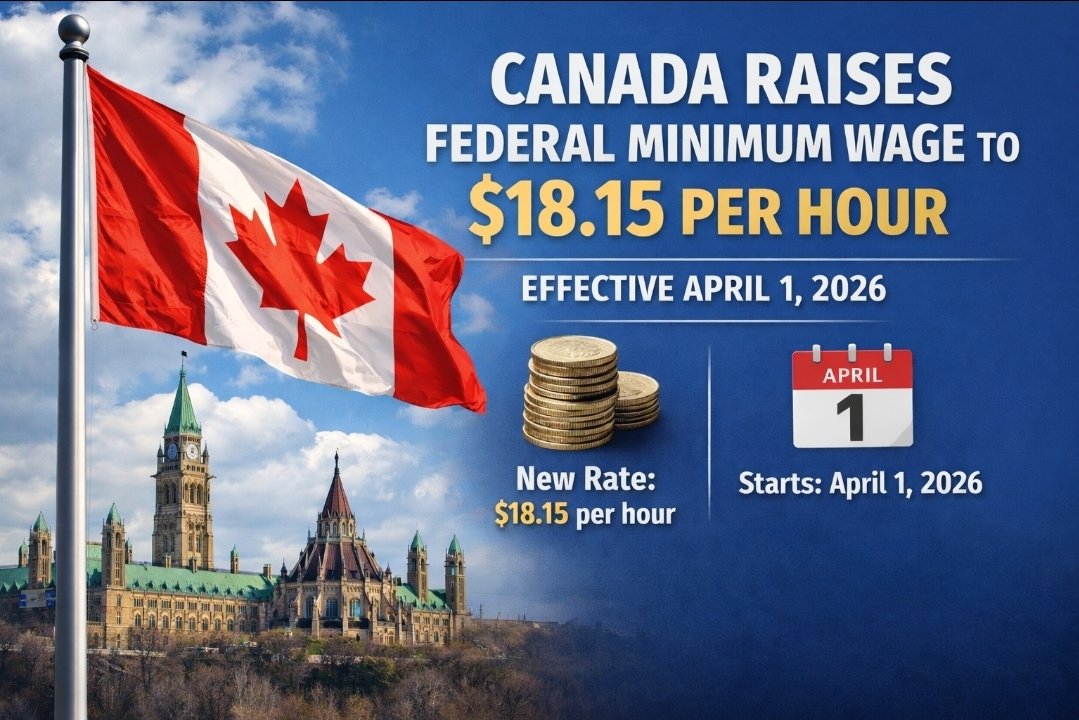
The Government of Canada says the federal minimum wage will increase to $18.15 per hour on April 1, 2026, following an annual inflation-based adjustment that applies to federally regulated private sector workers.
Key Highlights
- The federal minimum wage will rise to $18.15 per hour on April 1, 2026.
- The increase is based on the 2025 annual average Consumer Price Index, which rose 2.1%.
- The new rate represents a cumulative increase of 21% since the standalone federal minimum wage was introduced in 2021.
- Federally regulated private sector employers must pay the higher of the federal rate or the applicable provincial or territorial minimum wage.
- The current federal minimum wage is $17.75 per hour until March 31, 2026.
Federal Minimum Wage Increase Takes Effect April 1
The Government of Canada has announced that the federal minimum wage will increase from $17.75 to $18.15 per hour on April 1, 2026. Employment and Social Development Canada said the change is part of the federal government’s annual inflation-based adjustment mechanism for the standalone federal minimum wage.
According to the federal government, the 2026 increase is tied to Canada’s 2025 annual average Consumer Price Index, which rose by 2.1%. The adjusted wage is then rounded up to the nearest five cents, producing the new $18.15 hourly rate.
Who the Federal Minimum Wage Applies To
The federal minimum wage applies to employees in federally regulated private sectors. These include industries such as banking, telecommunications, interprovincial transportation, air transportation, and certain postal and courier services. The government’s labour standards page confirms that employers in those sectors must ensure eligible workers are paid at least the federal minimum wage.
However, the federal rate does not automatically override higher local standards. If a provincial or territorial minimum wage is higher than the federal minimum wage, federally regulated employers must pay the higher rate.
How Big the Increase Is
The new rate marks a 40-cent increase from the current federal minimum wage of $17.75 per hour, which took effect on April 1, 2025. The government says the 2026 adjustment brings the total cumulative increase since the standalone federal minimum wage was introduced in 2021 to 21%.
The federal government says regular annual adjustments are intended to protect the wage floor workers rely on and maintain a national baseline for fair pay in federally regulated workplaces. In the March 24, 2026 release, Employment and Social Development Canada said the measure has supported thousands of workers in minimum-wage jobs across the federally regulated private sector.
Why the Wage Is Adjusted Every Year
Canada’s federal minimum wage is indexed each year on April 1 using the previous calendar year’s annual average Consumer Price Index, as published by Statistics Canada. This formula is meant to preserve the wage’s purchasing power over time as consumer prices change. The government’s minimum wage page lists both the current rate and the forthcoming 2026 rate, while Service Canada’s general minimum wage page shows the April 1, 2026 federal rate at $18.15.
In practical terms, this means payroll systems must be updated before the new rate takes effect. The government said employers in federally regulated private sectors are required to adjust payrolls to ensure employees are paid at least $18.15 per hour starting April 1, 2026.
Government Position on Affordability and Worker Protection
In the official release, Employment and Social Development Canada framed the wage increase as part of a broader effort to strengthen worker protections and improve affordability. The department said indexing the federal minimum wage to inflation is intended to provide greater certainty and security to workers, while complementing other affordability measures announced by the federal government.
Minister Patty Hajdu said keeping the federal minimum wage aligned with inflation helps protect workers, especially those in the lowest-paid jobs in federally regulated sectors, and helps maintain a reliable wage floor. That statement appeared in the government’s March 24, 2026 news release.
What Workers and Employers Should Watch
Workers in federally regulated industries should review pay statements issued after April 1, 2026 to ensure the new rate is reflected where applicable. Employers should confirm whether their workforce is governed by federal labour standards and compare the new federal wage with the applicable provincial or territorial minimum wage, since the higher rate must be paid.
For readers outside federally regulated sectors, the announcement does not change provincial or territorial minimum wages directly. Those rates are set separately by each jurisdiction. The Service Canada wage table shows that some provincial rates remain below the new federal rate, while others may equal or exceed it depending on the jurisdiction and effective date.
Conclusion
Canada’s federal minimum wage will increase to $18.15 per hour on April 1, 2026, following the government’s annual inflation-based adjustment. The change affects federally regulated private sector workplaces and reinforces the rule that workers must receive whichever minimum wage is higher: the federal rate or the applicable provincial or territorial rate. For employers, the key task is payroll compliance. For workers, the main question is whether their job falls under federal labour standards.
Official References

About GovPrepare News Desk
GovPrepare News Desk is the official editorial team of GovPrepare.com, providing verified updates on government programs, policy, and emergency preparedness across North America. Each article is reviewed through automated and human quality checks to ensure accuracy and public trust.